Home / Reviews / Samsung Galaxy XCover7 Pro
Samsung Galaxy XCover7 Pro review
A removable battery, a card slot and two physical SIMs, from a company that will still exist in seven years.

The verdict
This is the rugged phone to buy if you want the things the rest of the industry deleted — a battery you can swap in the field without losing the IP68 rating, expandable storage and dual physical SIMs — backed by seven years of updates. The camera is ordinary. Everything else is the point.
Buy it if
- You need a battery you can replace yourself, repeatedly, for years
- You want physical SIM cards rather than eSIM
- You work in gloves, in the wet, or somewhere dusty
- You want a rugged phone from a maker whose support you can count on
Skip it if
- You want a good camera — owners are blunt that this is not one
- You want a fast phone for games; this is built for work shifts
- 6 GB of memory feels tight to you
- You want a compact phone — the protective body is bulky by design
Prices change daily, so we don't list them here. The button opens the current listing.
Specifications
| Model year | 2025 (US version) |
|---|---|
| Operating system | Android 15 with One UI 7.0 |
| Software support | 7 Android upgrades and 7 years of security updates |
| Display | 6.6 in FHD+, 1080 x 2408, 120 Hz |
| Touchscreen | Works with gloves and with a wet screen |
| Chipset | Qualcomm Snapdragon SM7635, up to 2.4 GHz |
| RAM | 6 GB |
| Storage | 128 GB plus microSD up to 2 TB — see the note on the listing below |
| Rear cameras | 50 MP main and 8 MP ultrawide |
| Front camera | 13 MP |
| Battery | 4350 mAh, user-replaceable |
| Durability | IP68; MIL-STD-810H; drop-tested to 1.5 m |
| Connectivity | 5G and Wi-Fi 6E; two physical SIM slots |
| Extras | Programmable hot keys for push-to-talk, Samsung DeX, Knox security |
| Carriers | Sold unlocked |
What it is
A work phone. Samsung builds the XCover line for people who are issued a phone rather than choosing one — utilities, warehouses, construction, field service — and it shows in every decision. IP68 sealing, MIL-STD-810H testing, a 1.5-metre drop rating, a touchscreen that works through gloves and keeps tracking when the glass is wet.
What makes it interesting to people outside that world is the feature list it kept. A battery you can swap by hand. A memory card slot. Two physical SIM trays. Those three things have quietly disappeared from almost every phone on sale, and one owner here says plainly that nothing else on the market met his requirements.
The battery you can actually replace
This is the headline, and it deserves more than a specification line.
The 4350 mAh cell is user-replaceable. An owner three XCovers deep describes the procedure: pop the back cover off, tip the old battery out, drop the new one in, snap the cover back on. The part that matters is what he says next — the phone keeps its water resistance afterwards. On a sealed phone, a battery replacement means a service centre, adhesive and a gamble on whether the seal is as good as it was. Here it is a thirty-second job you can do in a van.
The same owner reports 48 hours of heavy use per charge. Between the runtime and the spare in a pocket, running out of power stops being a thing that can happen to you.
Seven years of updates, and why that claim is different here
Samsung commits to seven Android upgrades and seven years of security patches on this phone. Elsewhere on this site we have argued that seven-year promises are somewhat theoretical, because the hardware tends to age out first — on a folding phone, a hinge that opens and closes a hundred times a day will feel old long before the software stops arriving.
This phone is the exception that proves the point. There is no hinge, the body is built to survive being dropped, and the one component that reliably dies — the battery — is a consumable you replace yourself. Seven years of software on hardware you can keep alive is a genuinely different proposition from seven years of software on a phone you cannot open.
For comparison, the previous XCover6 Pro was sold with four Android upgrades and five years of security. That is a large jump in one generation.
What the listing gets wrong
The storage field reads 2 TB. No phone in this class ships with two terabytes of onboard storage, and this one does not either — it has 128 GB built in, and 2 TB is the maximum size of memory card it accepts. The product title says 128 GB and the comparison table says 128 GB plus microSD. Read the field as a card ceiling, not as capacity.
The mistake is worth flagging precisely because expandable storage is a real reason to buy this phone. You can get to two terabytes, but you will be buying the card separately.
Against the XCover6 Pro
Unusually for a rugged line, the newer model is better in every row of the maker's own comparison rather than cheaper in some and worse in others.
Same 6.6-inch 120 Hz screen, same 50 MP and 8 MP cameras, same 13 MP front camera, same 6 GB and 128 GB. What changed: a newer Snapdragon, a bigger battery (4350 against 4050 mAh, still replaceable), face recognition where the older phone had none, stereo speakers instead of mono, a memory card ceiling doubled from 1 TB to 2 TB, and the update commitment going from four Android versions to seven.
If you already own the XCover6 Pro and the battery still holds a charge, none of this is urgent. If you are buying now, there is no case for the older one.
Built for a shift, not for a camera
Both owners here volunteer the same caveat before anyone asks: this is not a camera phone. 50 MP on the main sensor and 8 MP on the ultrawide produce perfectly usable pictures of a serial number, a damaged part or a delivery, which is what the phone is for. If photography matters to you, this is the wrong phone and its owners will tell you so first.
What it has instead is the work kit: programmable hot keys that can be bound to push-to-talk so the phone behaves like a radio, DeX for running it on an external screen, Knox for device management, and Wi-Fi 6E alongside 5G.
The thing owners worry about
Not the phone — the category. One owner, buying the upgrade for her husband, says outright that it would break his heart if this line were discontinued and he had to move to cloud storage, eSIM and battery packs like everyone else.
That is a fair anxiety rather than a complaint about this model. Replaceable batteries, card slots and physical SIM trays survive in a shrinking corner of the market, and they survive here because business buyers demand them, not because consumers were asked. It is also the strongest argument for buying this phone rather than waiting: the configuration you want exists right now.
Who it competes with
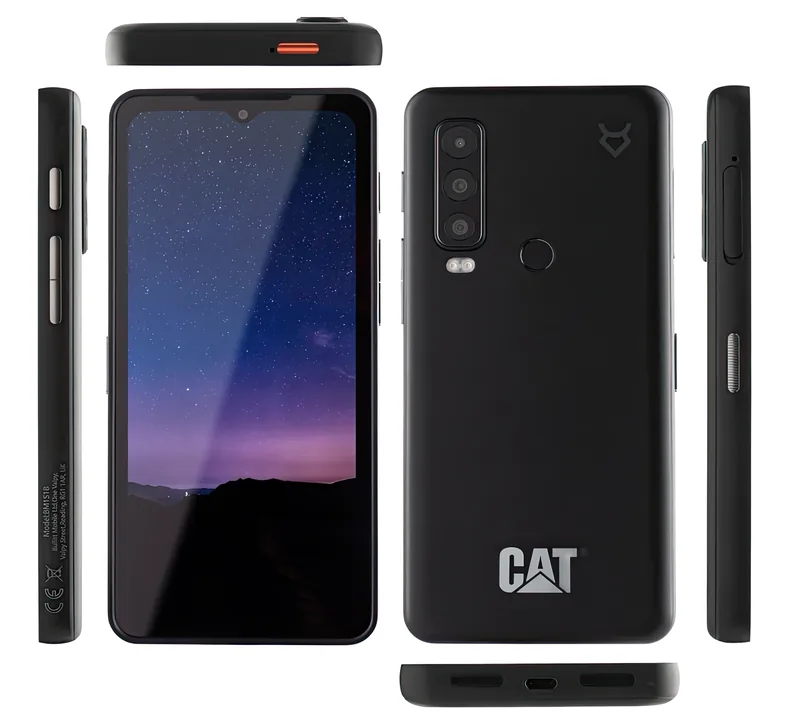
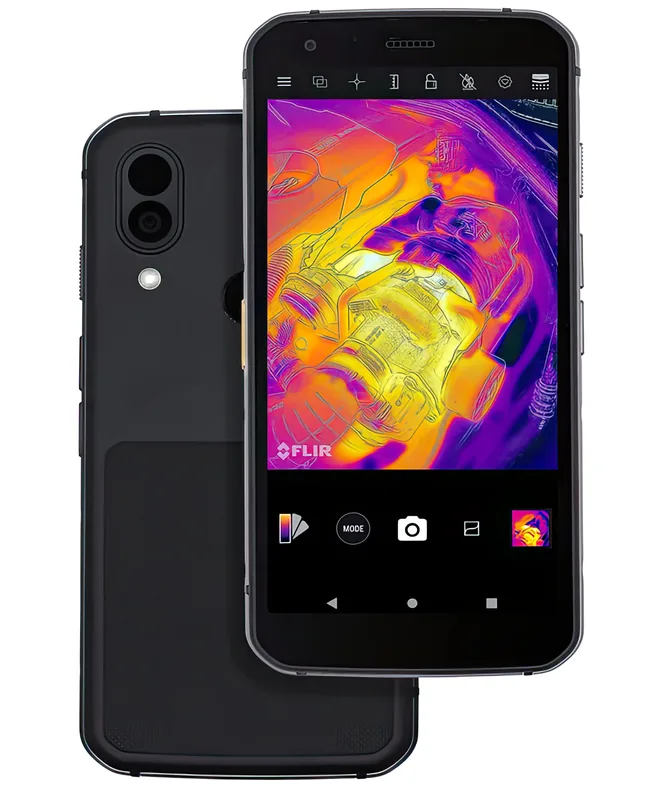
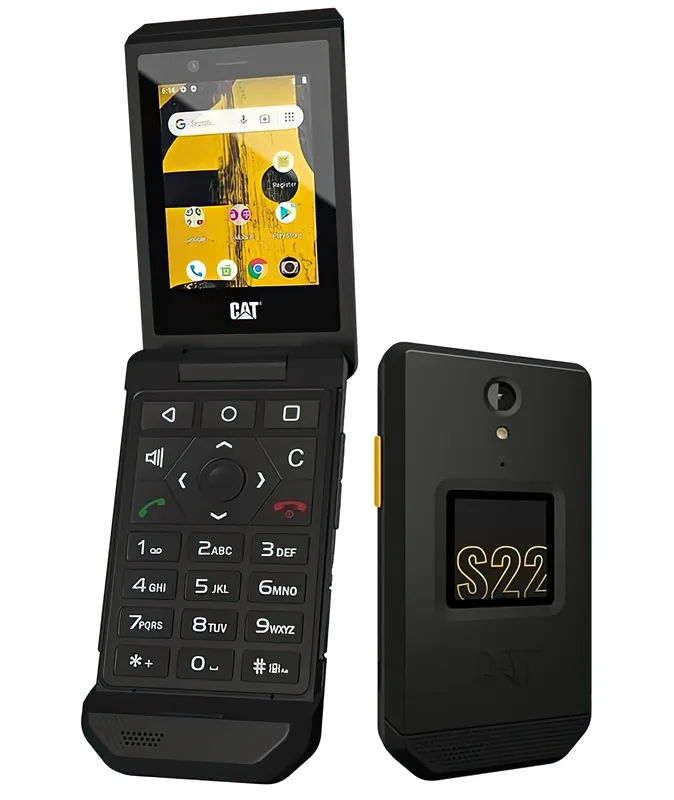
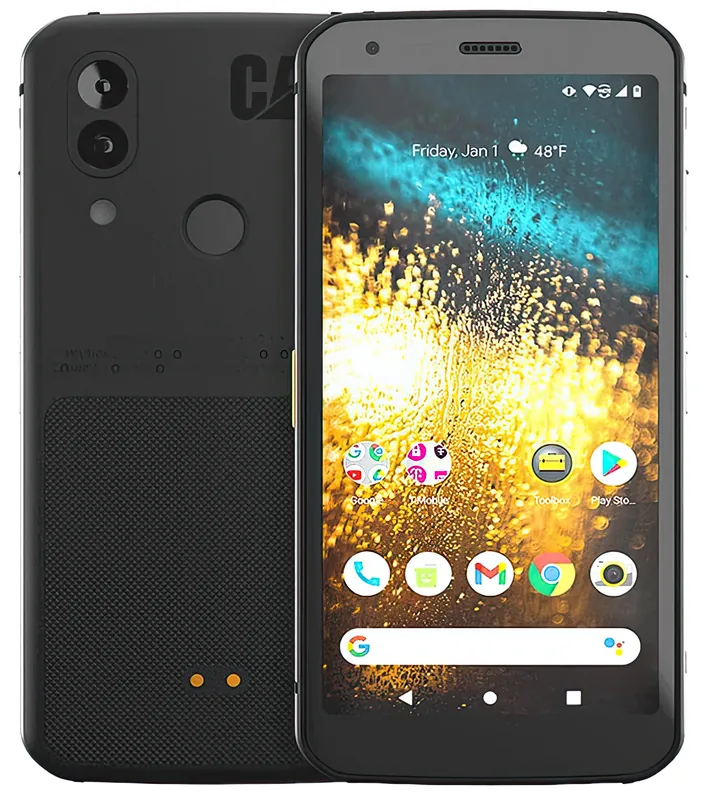
Against the CAT phones on this site, the XCover7 Pro is the newer machine in every respect that matters day to day: a current chipset, seven years of committed updates, stereo speakers and a battery you can replace yourself in the field. The CAT range earns its place on specialised certifications instead — thermal imaging on the S62 Pro, a hazardous-area marking on the S48c, satellite messaging on the S75. If you need one of those specifically, that is the reason to buy one over this. If you do not, this is the better phone.
Against a conventional phone in a rugged case, you get the sealed body, the glove-friendly screen and the swappable battery, and you give up camera quality and raw speed. Against nothing at all — which is the honest state of the market for dual physical SIM plus removable battery plus card slot — it simply wins.
Gallery


More like this